
Polycarbonate parking structure glazing is specified by impact exposure, not by area. The brief for a 480-space car park refurbishment was one line: replace the stair core glazing, keep it clear, and stop replacing it every eighteen months. The previous installation had been 6 mm acrylic, which had survived neither a stray trolley nor the site cleaning machine.
The replacement was 10 mm solid polycarbonate parking structure glazing in a steel frame, with 4 mm clearance holes and EPDM bedding. Four years on, two panels have been replaced, both from vehicle contact at the ramp barrier.
Polycarbonate parking structure glazing: thickness by exposure
- 8 mm: protected openings, panels up to 1.2 m wide, low traffic
- 10 mm: stair cores, ramp edges, areas with trolley traffic
- 12 mm: high-risk openings, or spans over 1.5 m without a mullion
- Laminated or glass-clad: where a tested impact or attack rating is specified
Note the difference between impact resistance and a rating. Polycarbonate will absorb a lot of energy, but a certified assembly needs a tested frame, anchorage and panel together. Buyers who quote a thickness as if it were a rating usually discover the gap at handover.
Framing is where most installations fail. A rigidly clamped panel with no clearance cracks at the screw line within a heating season, because the sheet moves and the frame does not. Slot the holes, bed the panel on EPDM, and leave a 3 mm gap at each edge for movement and drainage.
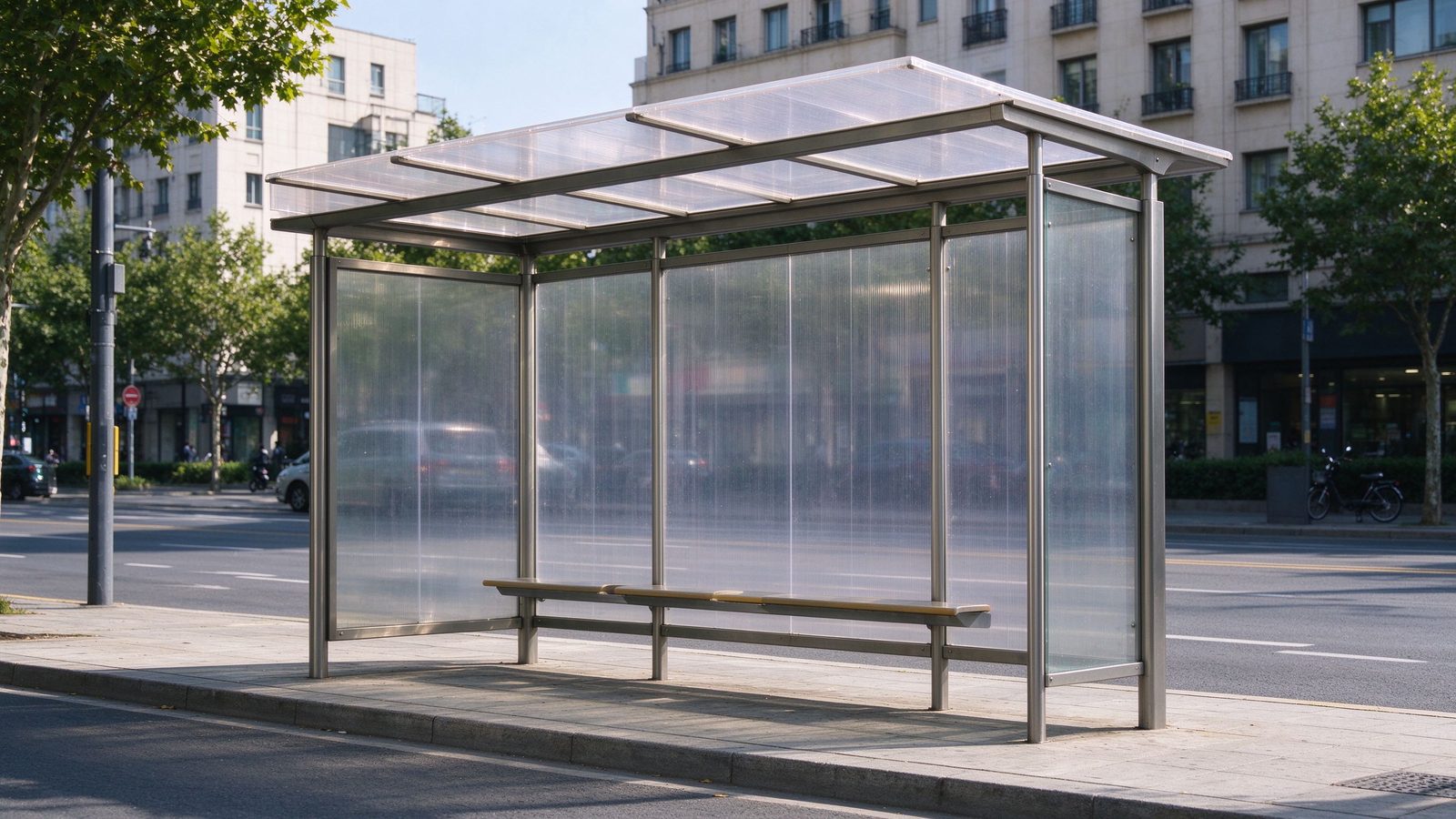
Ventilation, cleaning and the maintenance plan
A glazed stair core with no ventilation becomes a condensation chamber. Water on the inside face of a polycarbonate panel is not a defect, it is a design omission. Provide cross ventilation at the top and bottom of the core and the panels stay clear.
Cleaning in a parking structure is industrial. Alkaline traffic-lane cleaners attack polycarbonate, particularly at stressed edges. Specify a neutral detergent, a soft brush, and a rinse, on a quarterly cycle. Our polycarbonate security glazing guide sets out the attack-resistant build-ups, and the cleaning guide lists compatible agents.
Where the structure also needs rooflights, the same project often specifies a different product, and the polycarbonate skylight specification guide covers the multiwall options and U-values.
One procurement note: order all panels for a phase from one production batch. Polycarbonate tint varies slightly between extrusion runs, and a stair core glazed in two phases will show the join at eye level.
Send your structural drawings and impact requirement to oversales@rpplexiglass.com for a glazing schedule.
Frequently Asked Questions
What thickness of polycarbonate for a parking structure?
8 mm solid sheet is the common minimum for a guarded opening; 10 mm to 12 mm where vehicle impact or deliberate attack is credible, or where the panel spans more than 1.2 m without a mullion.
Does polycarbonate stop forced entry?
Solid polycarbonate resists repeated impact far better than glass or acrylic, but a standard panel is not a certified forced-entry assembly. Where the specification calls for a rating, laminated or glass-clad constructions are used with a tested frame.
Why do parking structure panels haze?
Exhaust, dust and car wash chemicals. Cleaning frequency and the choice of detergent matter more than the grade. A hard-coated panel helps, and a scheduled wash cycle prevents the build-up that makes panels look opaque.