
On a bridge, the heaviest enemy is not noise — it is the extra dead load a barrier adds to the deck. That is exactly why specifiers turn to transparent noise barrier panels for bridges: a clear acrylic screen is far lighter than a masonry or metal barrier of equal height, and it keeps the view that makes the bridge worth driving.
What a bridge barrier has to carry
A bridge screen sees wind load that is higher and less predictable than on a roadside wall, plus the deflection from traffic and temperature swing. The panel thickness has to be sized for the wind zone and the panel height, and the frame has to transfer that load without concentrating it at a bolt. Because acrylic is lighter than laminated glass at equal clarity, it lets engineers spec a taller screen without rebuilding the deck.
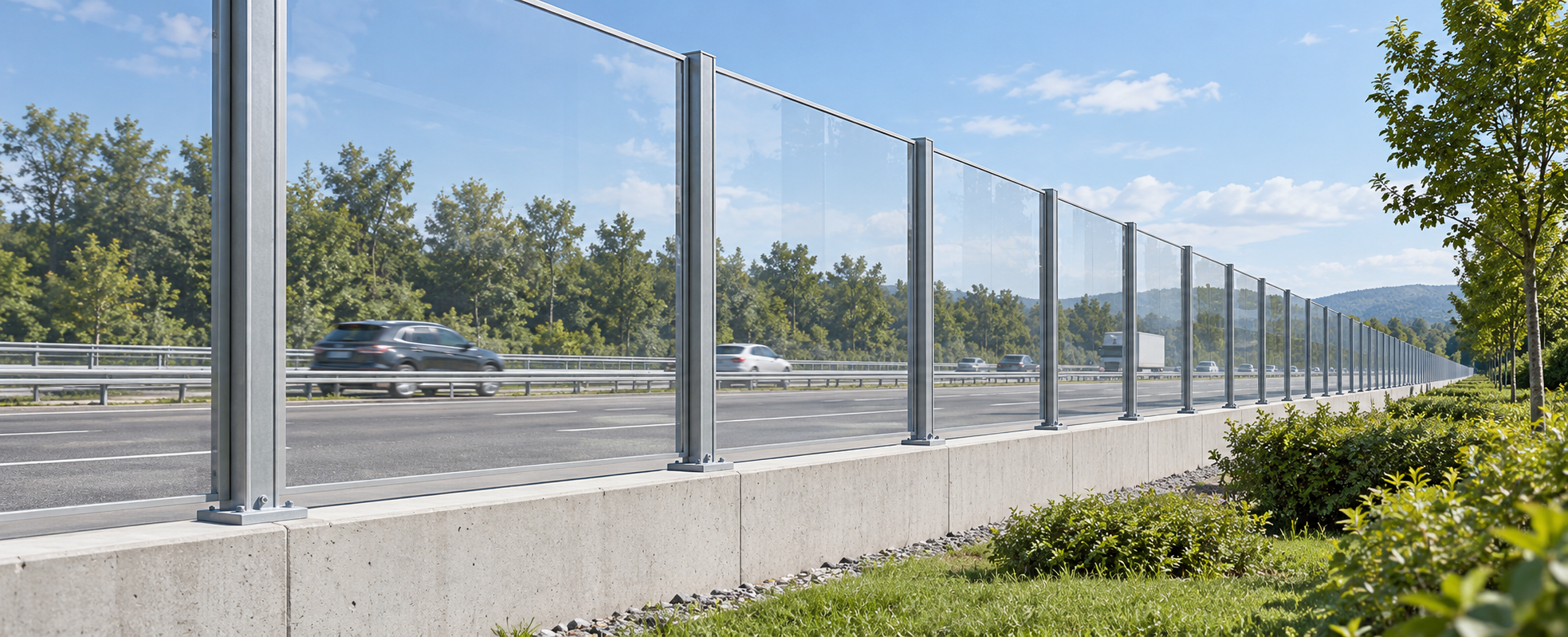
Sizing the panel for the bridge
- Wind zone and panel height drive the thickness choice.
- Frame and fixing must spread load, not point-load.
- Weight saving allows taller screens without deck reinforcement.
- Expansion and temperature movement need accommodation.
For the rail side of the same family, see the transparent railway noise barrier corridor case study, and for how the material stack behaves, acrylic versus polycarbonate noise barrier.
Frequently Asked Questions
Q: Why use transparent panels on a bridge?
A:They are far lighter than masonry or metal of equal height, preserve the view, and let engineers spec a taller screen without heavy deck reinforcement.
Q: How thick must a bridge noise barrier panel be?
A:Thickness follows the wind zone, panel height and deflection limit; confirm the wind load for the site before choosing the gauge.
For a transparent noise barrier quotation matched to your project, email oversales@rpplexiglass.com with the route, height and panel spec.