
Rail procurement rarely fails on the sheet itself. It fails on the checklist: someone orders 15 mm panels with road-wall post spacing, and the submission is returned before it reaches the acoustic consultant.
Six items a rail noise-wall package has to answer
- Panel height and exposed area. Rail corridors commonly run 4–5 m; a 2 m panel is a road spec and will be rejected.
- Thickness against span. 20 mm cast acrylic at 2,000 mm post centres, or 15 mm only when posts are at 1,500 mm.
- Rw target. Urban rail walls usually call for Rw 32–35 dB in the transparent section; plain 20 mm acrylic lands near 33 dB and needs an absorptive backing to go higher.
- Fragment retention. Rail authorities increasingly ask for a retention layer or a laminated build so a cracked panel stays in the frame.
- Train-induced pressure. Panels close to the track see repeated pressure pulses, so fixings need gaskets and clearance, not a rigid clamp.
- Maintenance access. Removable panels at 1.5 m width, so a two-person crew can lift one out without a crane.
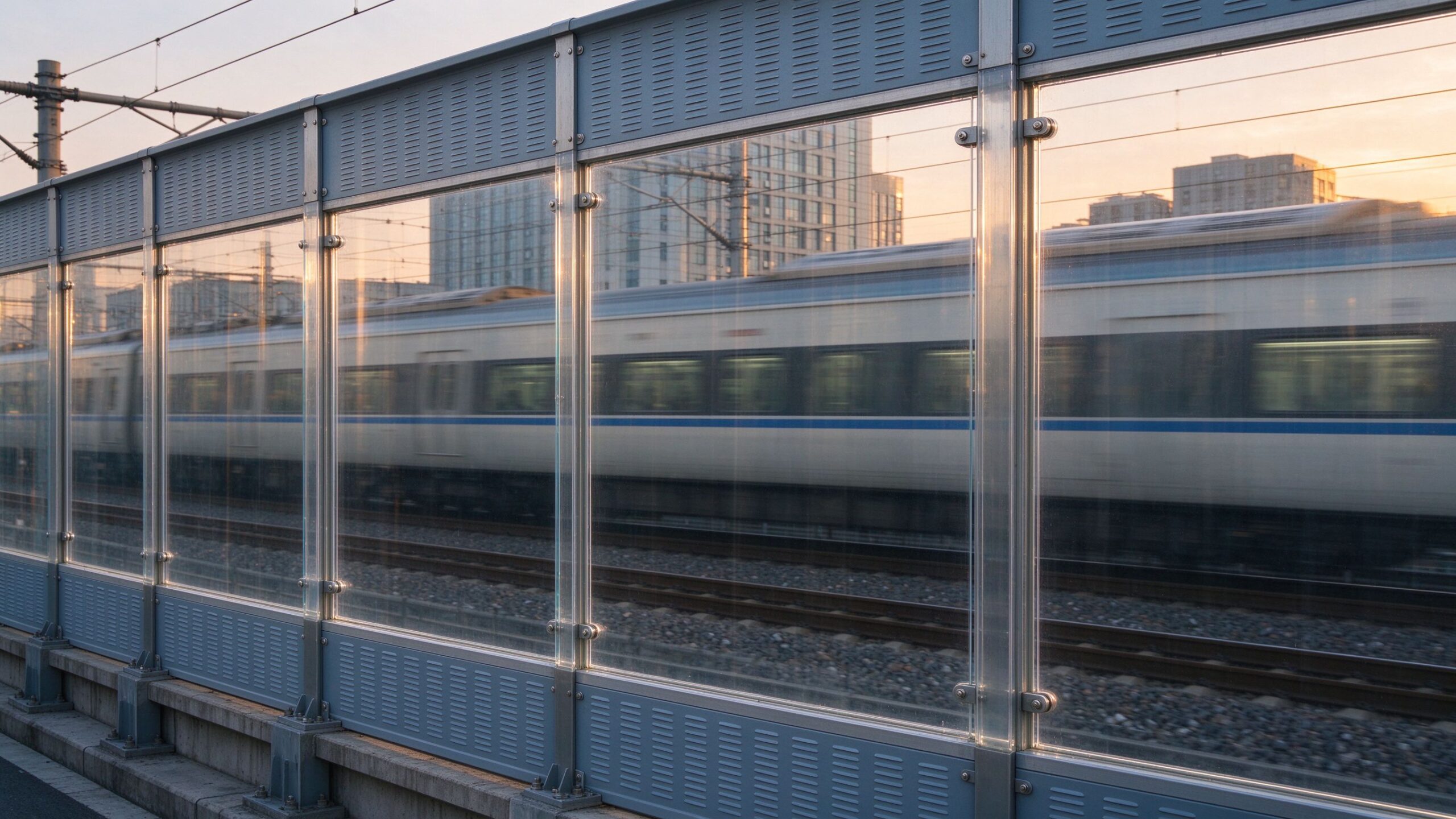
One corridor, worked through
A suburban line running 60 m from a housing block specified 20 mm clear cast acrylic, 1,500 mm wide by 4,000 mm high, set between steel posts at 2,000 mm centres with an aluminium retainer at each joint. Panels were drilled at 350 mm vertical centres with 18 mm holes for M10 stainless bolts and EPDM washers. Measured reduction at the facade was 33 dB, which met the 32 dB requirement.
The detail that mattered most was the retainer, not the panel. Aluminium H-profiles held each edge with a 4 mm gap, so the acrylic moved inside the profile rather than against a fixed bolt. Two years of service produced no cracking at the fixings.
The rail-specific route and noise-profile approach is discussed in transparent railway acoustic panels, and the broader comparison of clear wall options sits in transparent acoustic barriers.
Frequently Asked Questions
Q: Can a road noise barrier panel be used on a railway?
A:Usually not without a redesign. Rail corridors run taller panels, closer post spacing and a fragment-retention requirement, and the train pressure pulses load the fixings differently. A 15 mm road panel at 4 m centres is normally rejected for rail.
Q: What acrylic thickness suits a railway sound wall?
A:20 mm cast acrylic at 2,000 mm post centres is the common rail spec, giving around Rw 33 dB; 15 mm is workable only when posts are at 1,500 mm. Higher Rw targets need an absorptive backing rather than simply thicker sheet.
Send your sound-wall drawings, span between posts and required Rw to oversales@rpplexiglass.com for a cast acrylic panel quotation with drilling and edge details.