
A rail operator that simply reordered the same transparent railway acoustic panels used on its neighbouring line learned the hard way: the new corridor had sharper curves, tighter headways and a residential boundary at a different distance, so the acoustic shortfall showed up in the first noise monitoring report.
What changes from one route to the next
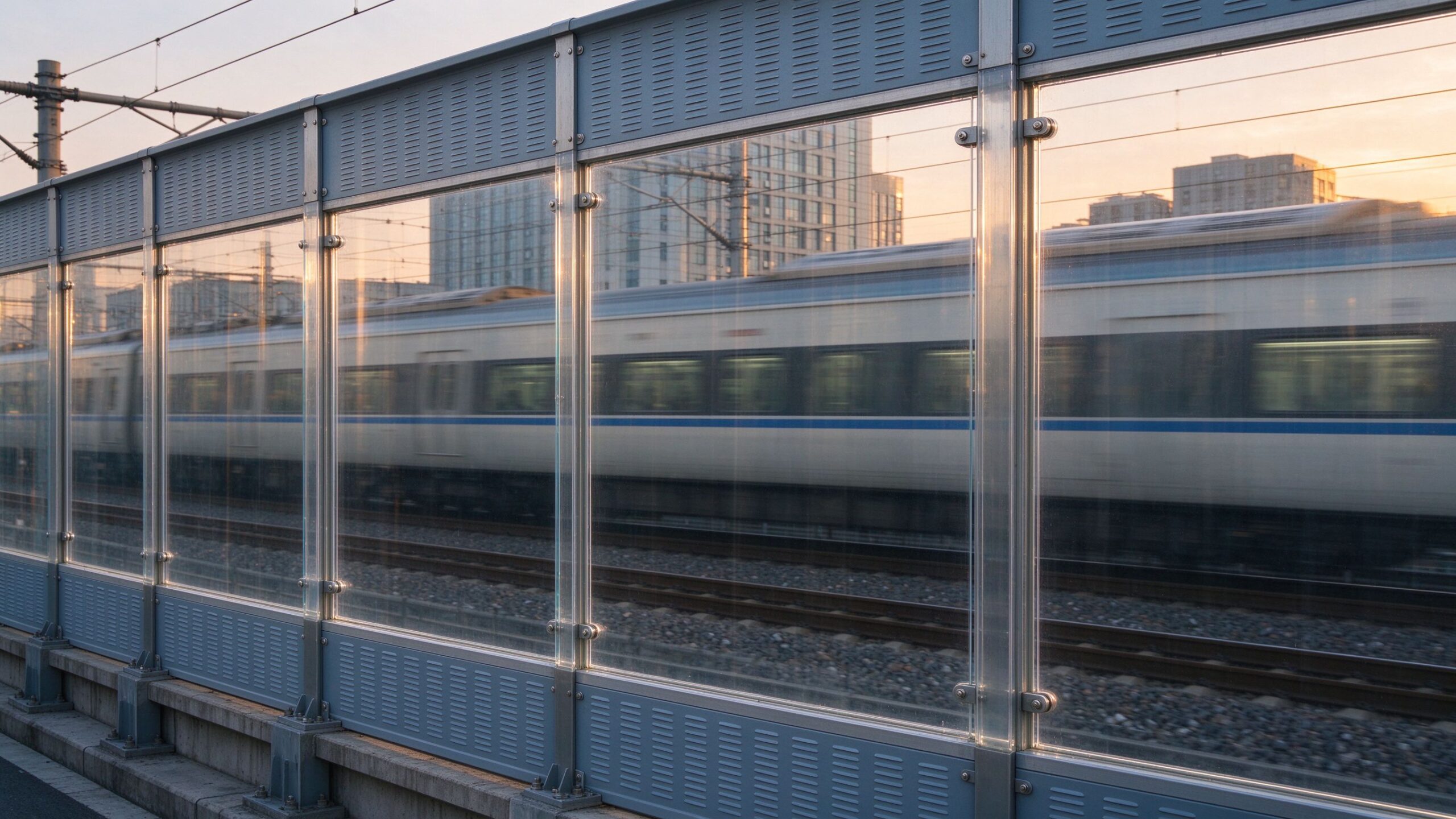
Train noise is not a single number. Wheel-rail rolling noise dominates on straight high-speed track, while traction and aerodynamic noise matter more in stations and at speed changes. The transparent panel that works on an open intercity section may be wrong where trains brake and dwell. Thickness, height and the gap under the panel all affect how much reaches the boundary receiver, so the spec has to follow the measured noise profile of the actual line.
Building the panel around the receiver
- Map the boundary receivers and their distance from the track.
- Size the panel height to the top of the noise source, not the top of the train.
- Close the base gap, because low-frequency leakage defeats the panel.
- Match thickness to wind loading on the exposed embankment.
For the full design method behind transparent rail screens, see the rail corridor acoustic barrier case study, and for how the two transparent materials differ, acrylic versus polycarbonate noise barriers.
Frequently Asked Questions
Q: Do transparent railway acoustic panels reduce train noise?
A:Yes, when sized to the route. The panel must follow the measured noise profile, close the base gap and reach above the dominant noise source to protect the boundary.
Q: Is one railway panel type right for every line?
A:No. Curves, headways, speed changes and receiver distance all change the required height, thickness and gap, so the spec should be route-specific.
For an acrylic noise barrier or wind screen quote matched to your route and loading, email oversales@rpplexiglass.com with the corridor, height, panel size and wind zone.