
Pearlescent acrylic for cosmetic displays is approved under retail light, not under the office light where the swatch was signed. A beauty brand rolled a 60-counter display programme across three markets using pearlescent acrylic in a soft champagne tone. The first 20 counters matched. Counters 21 to 40 arrived two shades warmer, and the brand rejected them at installation because the shelves no longer matched the header graphics printed in the first batch. Nobody had set a colour tolerance.
Pearlescent acrylic for cosmetic displays is judged on appearance under retail lighting, where a one-unit shift in tone is visible against a printed header. The material is stable; the process is where variation enters. Pigment loading, gloss level and batch control are the three levers, and each has to be written into the order.
Pigment loading and what it costs
Pearlescent pigment is typically loaded at 1 to 4% by weight in PMMA. Below 1% the shimmer reads as a faint sheen and disappears under bright retail lighting; above 4% the surface looks metallic and the sheet becomes harder to weld and polish cleanly. The middle of the range gives the effect most beauty displays want.
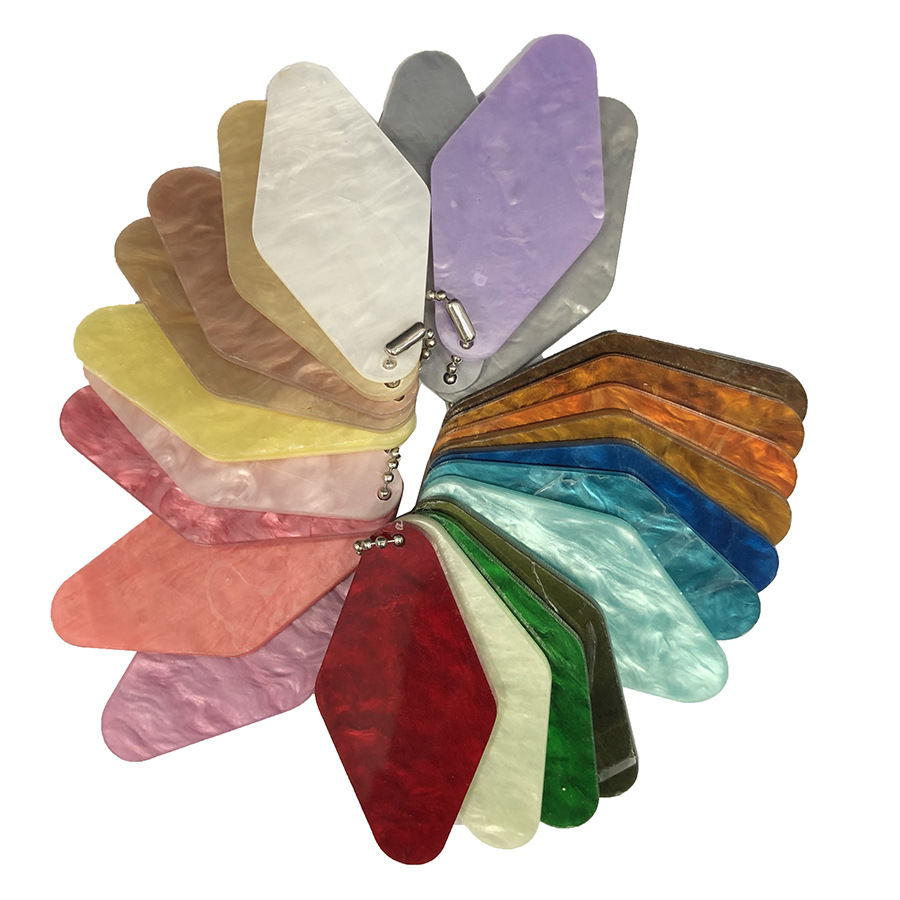
Loading also drives price, because the pigment is the expensive component. A supplier quoting a pearl sheet at a clear-sheet price is either using a low loading or a filler pigment, and both show at the counter. Ask for the loading figure and a retained sample rather than accepting a swatch.
Gloss and the reading of shimmer
Pearl reads best at a gloss of 70 to 90 on the face. A high gloss shows fingerprints and hairline scratches under counter lighting; a satin face at 30 to 40 calms the shimmer and hides marks but loses sparkle. For a cosmetics counter, a 70 gloss with a hard coat is the usual compromise.
Edges matter more than buyers expect. A sawn edge on pearl sheet reads as a pale, chalky line against the shimmer face, and on a shelf 20 mm thick that line is visible from the customer side. A diamond-polished or flame-polished edge removes it, and the cost difference on a shelf is small.
Pearlescent acrylic for cosmetic displays: batch control
Set a colour tolerance of Delta E 1.5 or better between batches, measured on the face at a fixed 45° geometry, and require a retained sample per batch. For a rollout in different markets, that tolerance is what allows counters to be produced months apart and still look like one programme.
The distinction between pearl and interference coating, including which one survives polishing, is set out in our note on pearlescent acrylic sheet. Where a stronger colour shift is wanted for a decorative screen rather than a shelf, the retail signage and display guide sets out how each finish behaves in a lit counter.
The four-point sign-off
Approve a sample under the counter lighting, at the shelf thickness, with the edge finish applied and next to the printed header. Four conditions in one review, because each of them shifts the perceived colour. A swatch on a desk under office light satisfies none of them and is the most common reason a pearl display is rejected at install.
Cleaning a pearl shelf is a daily operation. Use a microfiber cloth and a neutral detergent, never an alcohol wipe, and never a scouring pad. A scratched pearl face cannot be polished back to an even shimmer, because the pigment sits through the thickness and polishing changes the surface gloss without restoring the effect.
Send the shelf drawings, target tone and counter lighting specification to oversales@rpplexiglass.com, and we will quote pearlescent acrylic with a batch-retained sample and a Delta E tolerance for the rollout.
Frequently Asked Questions
What is pearlescent acrylic used for?
Cosmetic and beauty displays, premium retail shelving, signage faces and decorative panels where a soft shimmer is wanted without a mirror finish. It is also used for packaging elements and display plinths where the colour has to read consistently across a rollout.
Can pearlescent acrylic be polished?
Yes, edges can be diamond or flame polished, and that is normally required on visible shelf edges. The face should not be polished, because the effect is through the thickness and polishing changes the gloss without restoring the original shimmer.
How do I keep pearl colour consistent across batches?
Set a Delta E tolerance of 1.5 or better at a fixed 45 degree measurement, require a retained sample per batch, and approve under the actual counter lighting at the production thickness. Tone drift between batches is the most common cause of a rejected rollout.