
On an elevated highway the barrier has to do something a garden fence never does: take a vehicle impact without turning the transparent panel into debris. A TL-4 MASH noise barrier is therefore a crash-engineered system, and the acrylic sheet is specified as part of it, not on its own.
The panel is one link in a crash chain
MASH (Manual for Assessing Safety Hardware) Test Level 4 is a demanding impact condition. The system — post, bracket, panel and how the panel releases on impact — is designed together so the sheet either stays put or detaches cleanly without projecting fragments at the road or the slope below. A specifier cannot just buy a thick acrylic sheet and call it TL-4; the supporting hardware and release detail carry most of the safety case.
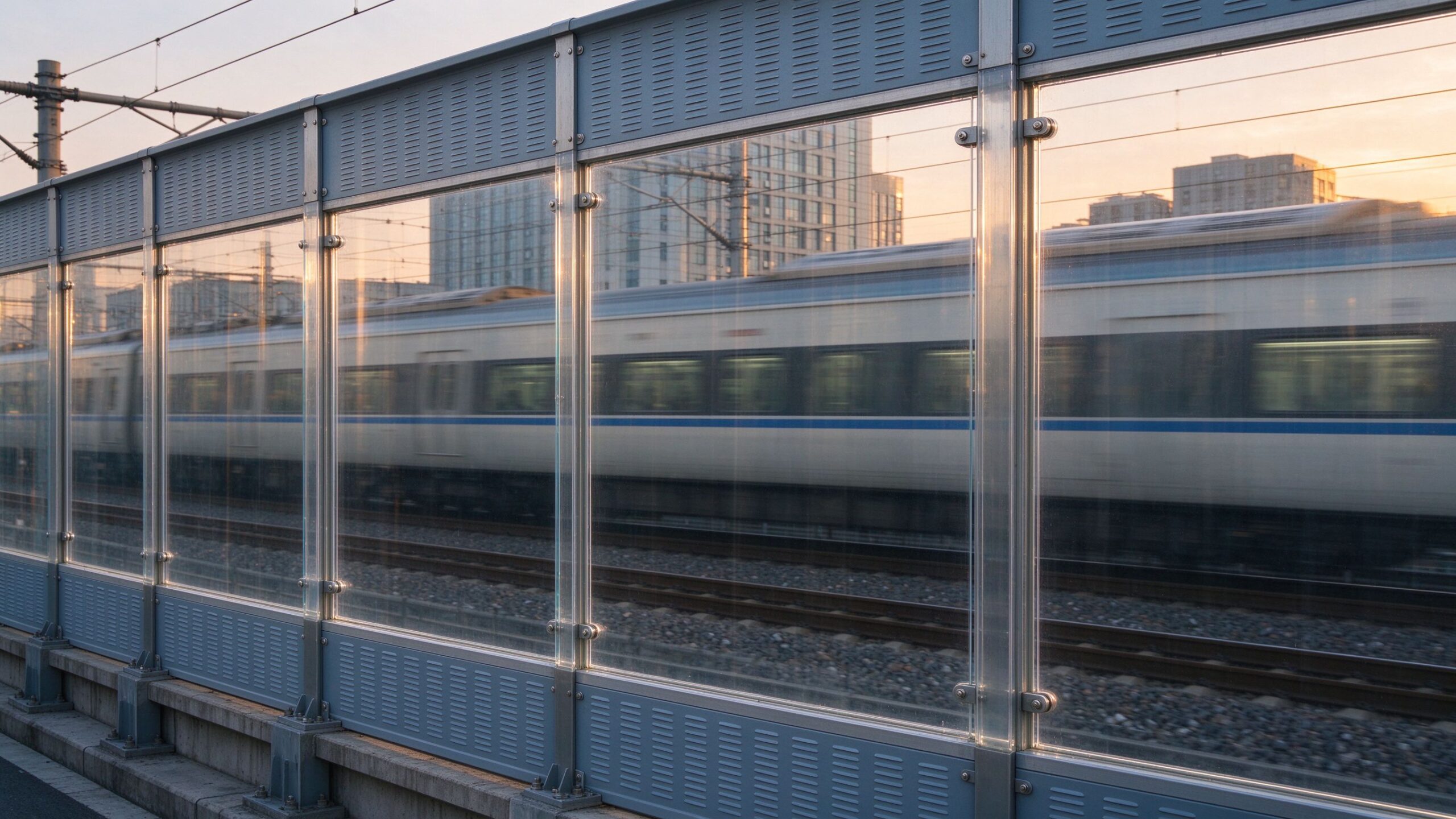
What the acrylic panel must deliver
- Impact energy absorbed without sharp-edge fragmentation.
- A release detail that lets the panel yield without projecting shards.
- Post and bracket tested as a matched system with the sheet.
- Acoustic performance retained so the crash case does not undo the noise design.
The rail-corridor version of this thinking is in the transparent railway noise barrier case study, and the test evidence a buyer should demand is in the test-report checklist.
Frequently Asked Questions
Q: Is a thick acrylic panel enough to meet TL-4 MASH on its own?
A:No. MASH TL-4 is a property of the whole system. The post, bracket and release detail decide impact safety as much as the panel thickness does, so the sheet must be matched to tested hardware.
Q: Does making a panel impact-safe weaken its acoustic performance?
A:Not necessarily. The panel still reflects and blocks sound; the crash-safe release detail is about how the sheet behaves on impact, not about holes that leak noise.
For a transparent acrylic barrier quoted to your route, loading and test standard, email oversales@rpplexiglass.com with the corridor length, panel height, thickness and the standard you need to meet.